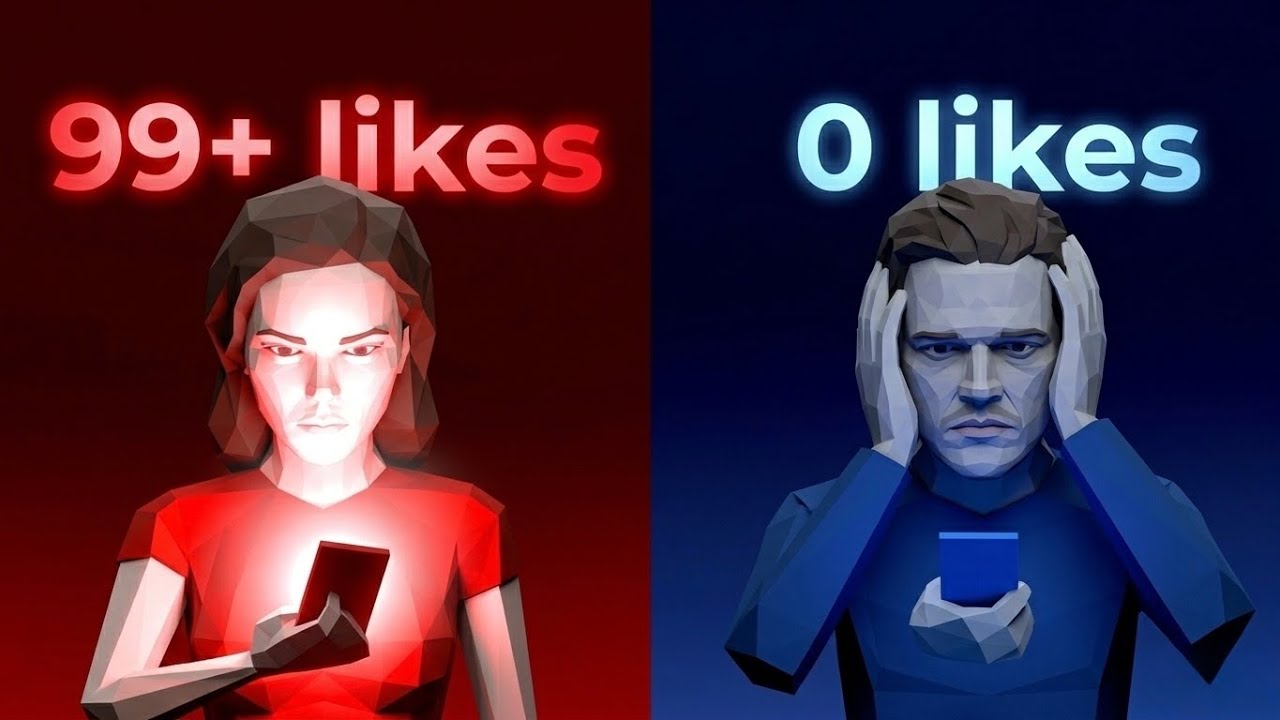
Two people download the same dating app. The guy spends hours perfecting his profile — choosing the right photos, carefully curating his bio, selecting images that show he has friends, travels, and lives an interesting life. The woman uploads a single decent photo and hits 'done.' By the end of the day, her inbox is overflowing with matches and messages. His? One like. Zero matches.
This isn't just bad luck. It's math. And the real damage isn't the lack of matches — it's what happens next in a guy's mind. He starts thinking he must be ugly. That he's not good enough. That if he can't even get matches on an app, why would he bother approaching women in real life? And that's when the real problem starts.
Here's what most guys don't understand: I've had pictures of myself rated 4.6 out of 10 that got me basically zero matches. Same person, different photos with better lighting and framing? 9.6 rating. The difference wasn't me — it was the pictures. But most guys never figure this out. They just assume they're chopped and let that assumption poison their real-world confidence. That negative self-perception becomes a self-fulfilling prophecy.
The Economics Are Rigged From The Start
Let's run the numbers. In an ideal world with equal numbers of men and women, where everyone sees 100 profiles per day and likes 25% of them, things would be balanced. Both men and women would average 25 likes and 6 matches daily. Fair game.
Reality check: On major dating apps like Tinder and Bumble, the ratio is roughly 70% men to 30% women. And a good chunk of those female profiles are fake. So the economics are already tilted hard before you even swipe.
When you adjust the simulation to reflect a 2:1 male-to-female ratio, everything changes. Women's likes double. Men's likes get cut in half. Women start getting 50 likes but can only see 100 profiles per day — meaning half the guys who liked them never even appear in their queue. They're literally drowning in options they'll never even see.
Meanwhile, men start getting desperate. With fewer likes coming in, they know they can't afford to be picky. So they start swiping right on basically everyone, hoping something sticks.
"Men swipe right by default and left here and there. Women swipe left by default and right here and there. Most of those matches aren't even real."
The Swipe Behavior Multiplier Effect
According to a 2014 New York Times analysis, men are nearly three times as likely to like a profile as women on Tinder. When you factor in men liking 46% of profiles while women only like 14%, the gender imbalance explodes.
Women now average 92 likes. Men get 7. Those seven likes result in about 3.2 matches for the average guy — because men are less selective, so most of their likes convert. Women get 6.4 matches despite having way more likes, because they're far more selective.
But here's the catch: a lot of those male matches are hollow. Guys swipe right on women they're not even attracted to, just playing the numbers game. Unless he's on day seven of no-fap, he's probably not actually interested. So women's inboxes are full of matches that go nowhere. The whole system is broken for everyone, just in different ways.
The Top 10% Hoard Everything
Here's where it gets really brutal. In 2017, Hinge shared data showing that half of all likes from men go to just 25% of women. Half of all likes from women go to only 15% of men. The top tier users get exponentially more attention than everyone else.
When you adjust the simulation for attractiveness distribution, the median male user — the actual average guy — receives one like and zero matches. Not the mean, the median. Half of all men do worse than that.
The top 10% of male users average 37 likes. Regular guys? Somewhere between zero and one. And here's something wild: because the top-tier men are less selective than top-tier women, they actually get more matches than the hottest women do. They get fewer likes overall, but convert more of them.
In real life, the dynamic flips. The absolute hottest women often get approached less because most guys assume they have no chance. But on dating apps, they're drowning in attention. This means it's actually harder to stand out to a nine or ten online than in person, where the competition is thinner.
"The top 10% of men actually get more matches than the top 10% of women — because they're less selective and convert more of their likes."
Why Hinge Wins (And What It Tells You About The Game)
Hinge limits free users to seven likes per day. Very few women are paying for premium, which means this artificial scarcity offsets the entire imbalance. Women can't just swipe endlessly, so your likes have a much better chance of being seen and leading somewhere real.
This doesn't mean you shouldn't use Tinder or Bumble. But it does mean understanding the platform dynamics matters. Most women download an app, match with a guy early who actually tries to meet up fast, start dating him, and then stop using the app. They're not building harems. They're not sleeping around with Chads. That whole narrative is fiction.
Women don't have the same biochemistry we do. They don't have our testosterone levels. Casual sex isn't as exciting or rewarding for them — most surveys show women aren't even satisfied with one-night stands. What they actually want is different from what we want. Stop projecting your own mindset onto them.
The Real World Doesn't Work Like Your Phone
Here's the thing: a woman might have hundreds of matches online, but if you meet her in real life, you're not competing against those guys. You're competing against the handful of men who actually had the balls to approach her in person. That's a much smaller number.
In real life, especially during the day, you stand out by default. You're in a different category than the guys DMing on Instagram or texting 'hey' on Hinge. You've demonstrated confidence. You've shown you can handle social pressure. That counts for a lot more than most guys realize.
And here's the kicker about high-quality women: they exist on dating apps, but they're easier to find in real life. Not at clubs necessarily — though my last long-term girlfriend, who had a PhD from Oxford and was objectively stunning, I met at a bar. But the highest percentage of quality women are just out living their lives. Women who aren't club rats and aren't constantly on apps. You can still meet them. You just have to actually leave your house.
Bottom Line: What You Actually Need To Know
Stop Reading.
Start Doing.
Real approaches, hidden-mic feedback in real time, and a complete rewiring of how you show up. Three days in Las Vegas with AG.